
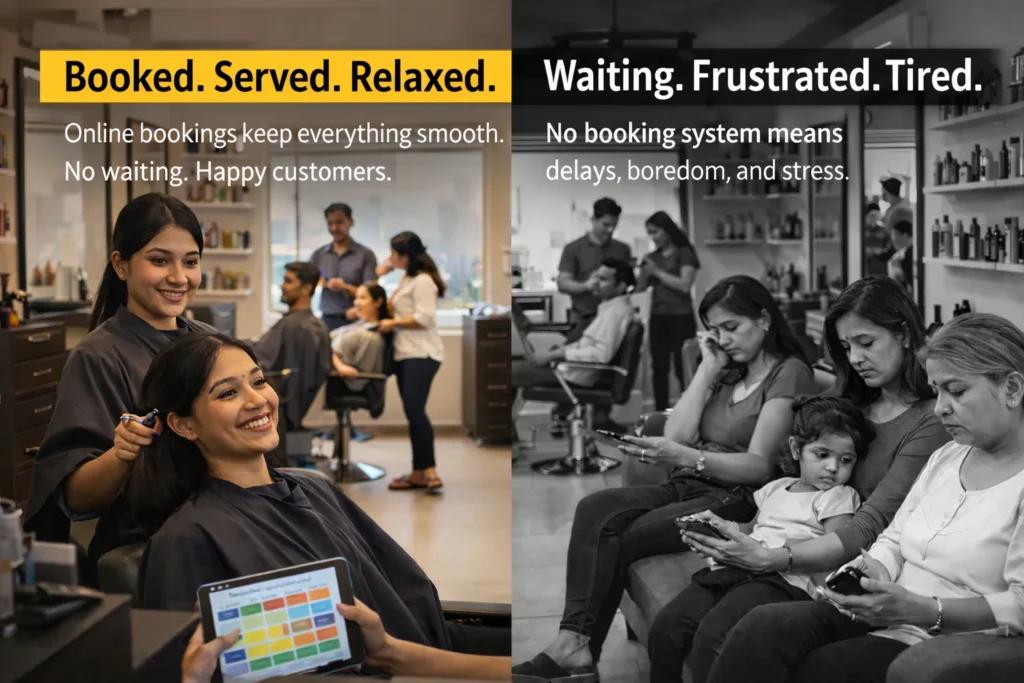
The last five years changed the Indian salon business forever.
From 2021 to 2026, salon owners faced lockdowns, rising costs, staff shortages, and new customer habits. Many salons shut down. Many struggled. Some adapted fast and grew stronger.
The difference was not size or brand name.
It was how quickly owners changed the way they ran their business.
This blog breaks it down in simple terms.
What changed. Why it changed. And what it means for salon owners in India today.
The Big Picture: Salon Industry Growth in India
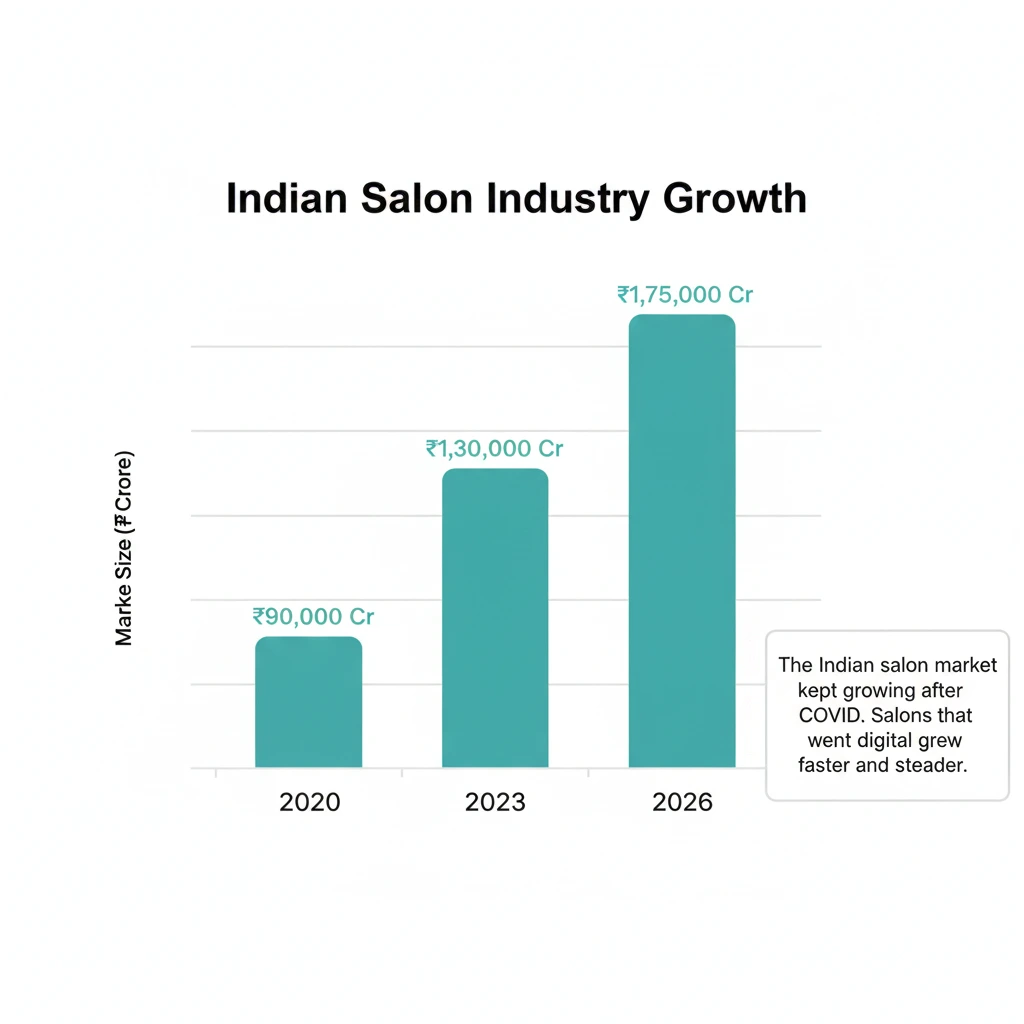
The Indian salon market kept growing, even after COVID.
- 2020: Around ₹90,000 crore
- 2023: Around ₹1,30,000 crore
- 2026: Around ₹1,75,000 crore
That is strong growth.
But not every salon grew equally.
Salons that stayed offline grew slowly.
Salons that went digital grew faster and steadier.
Customers stopped coming only for basic services
Earlier, many clients came just for a haircut or threading.
By 2026, this changed.
Customers now want:
- Men’s grooming packages
- Facials and skin treatments
- Organic and clean beauty services
- Results they can post on social media
Young customers under 35 drive most repeat visits. Social media raised expectations. People want to look polished, not just groomed.
What this means for owners
- Hair services still bring 55 to 65 percent of revenue
- Add on services increase bill value
- Premium packages work better than discounts
Salons that stayed cheap lost profits.
Salons that upgraded services earned more per visit.
Pricing and Income Changed
Earlier model
- Walk ins only
- One service at a time
- Cash payments
- No fixed income
By 2026
- Online bookings
- Digital payments
- Service packages
- Membership plans
Where money comes from now
- Services: 55 to 65 percent
- Product sales: 12 to 18 percent
- Memberships and packages: 10 to 15 percent
Memberships helped salons survive slow months.
Technology Changed Daily Work
What salons used before
- Phone calls for booking
- Manual bills
- Guessing product stock
- Verbal consultations
What salons use now
- Online booking apps
- UPI billing systems
- Inventory tracking
- Skin and hair analysis tools
Basic software costs ₹500 to ₹2,000 per month. Many tools even offer free plans.
Why technology became necessary
- Lockdowns killed walk ins
- Customers wanted online booking
- Staff became harder to find
- Owners needed speed and control
Young clients expect WhatsApp reminders and instant confirmations.
Did technology increase costs?
At first, yes.
- Setup cost: ₹10,000 to ₹50,000
- Monthly tools: Around ₹1,000
But savings came fast.
- No shows reduced by 20 percent
- Product waste dropped by 15 percent
- Billing became faster
- Staff workload reduced
Most salons recovered costs within 6 months. After that, yearly operating costs dropped by around 12 percent.
Staffing Became a Big Problem
After COVID, many workers went back to their hometowns. Some never returned.
What owners faced:
- Short staff
- Higher salaries
- Pressure from big chains
- Longer working hours
At the same time, hygiene costs increased.
- Sanitizers
- Disposable kits
- Safety measures
Overall costs rose by 15 to 20 percent.
Salons had two choices.
Raise prices smartly or improve efficiency.
Marketing Changed Completely
Earlier marketing
- Flyers
- Word of mouth
- Location based traffic
By 2026
- Instagram discovery
- Google searches
- Reviews and photos
Searches like “salon near me” increased almost three times after COVID.
If your salon was not online, customers could not find you.
Why a Website Became Critical by 2026
A website gave small salons control.
Earlier, many owners depended only on Instagram. DMs were messy. Bookings were confusing.
A website fixed this.
What changed
- Simple websites with service lists
- Online booking and payments
- Google Maps integration
- Clear brand presence
By 2026, around 50 to 60 percent of urban small salons had websites.
Real business impact of having a website
| Metric | Without Website | With Website |
| Monthly revenue | ₹1.5 to 2 lakh | ₹2 to 3 lakh |
| No show rate | 18 to 30% | 5 to 10% |
| Booking growth | Normal | +40% |
| Revenue loss yearly | High | Much lower |
Most salons recovered website cost in 3 to 6 months.
How Websites Increased Local Bookings
Websites helped salons capture customers who were ready to book.
What worked best:
- Online booking buttons
- Mobile friendly design
- WhatsApp click buttons
- Local area service pages
Customers trusted websites more than social profiles.
Results owners saw:
- 20 to 50 percent more bookings
- Fewer no shows
- Higher average bill value
Website Features That Actually Work
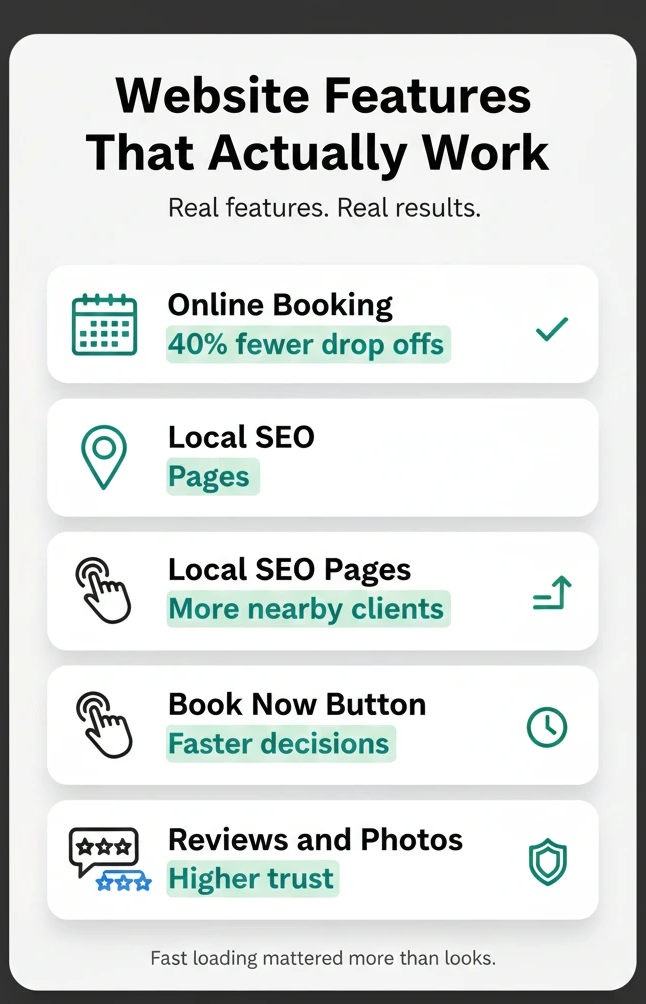
Not fancy design. Useful features.
| Feature | Result |
| Online booking | 40% fewer drop offs |
| Local SEO pages | More nearby clients |
| Book Now button | Faster decisions |
| Reviews and photos | Higher trust |
Fast loading mattered more than looks.
Real Case Study: Naturals Salon Franchise Partner
Location
Tier 2 city in South India
Salon details
- 6 chairs
- 7 staff
- Family and working professional clients
Situation in 2021
Even with a known brand name, this salon struggled.
- Walk ins dropped
- Phone bookings caused confusion
- Instagram messages were missed
- No shows crossed 25 percent
- Monthly revenue stayed around ₹2.2 to 2.5 lakh
The problem was local discovery and booking.
What the owner did
Between 2022 and 2023, the owner focused on basics.
- Built a simple 6 page website
- Added service prices and photos
- Enabled online booking
- Added WhatsApp button
- Optimized Google Business Profile
- Started memberships
Total cost stayed under ₹25,000.
Results by 2024
| Metric | Before | After |
| Monthly revenue | ₹2.2–2.5L | ₹3.4–3.8L |
| No shows | 25% | 9% |
| Online bookings | Under 10% | 55% |
| Avg bill | ₹1,100 | ₹1,450 |
Website cost recovered in four months.
Situation in 2026
- Revenue above ₹4 lakh monthly
- Stable memberships
- Fully booked peak hours
- Less stress on staff
- Competing with chains locally
The website became the main booking tool.
Social media became support, not dependency.
Challenges Still Exist
- Learning technology takes time
- Bad websites hurt trust
- Subscriptions must be tracked
- Google rules keep changing
Still, staying offline costs more.
Big Opportunities for Salon Owners
- Free booking tools to start
- Men’s grooming packages
- Clean beauty services
- Hyperlocal Google searches
Small steps bring big gains.
What Salon Owners Should Do in 2026
- Build a simple website. Not an app
Budget ₹10 to 15K - Add booking and WhatsApp buttons
Expect quick booking growth - Reduce no shows first
This boosts profit fast - Train one staff member on tools
No new hiring needed - Update photos and reviews regularly
Keeps trust and rankings high
Final Thoughts
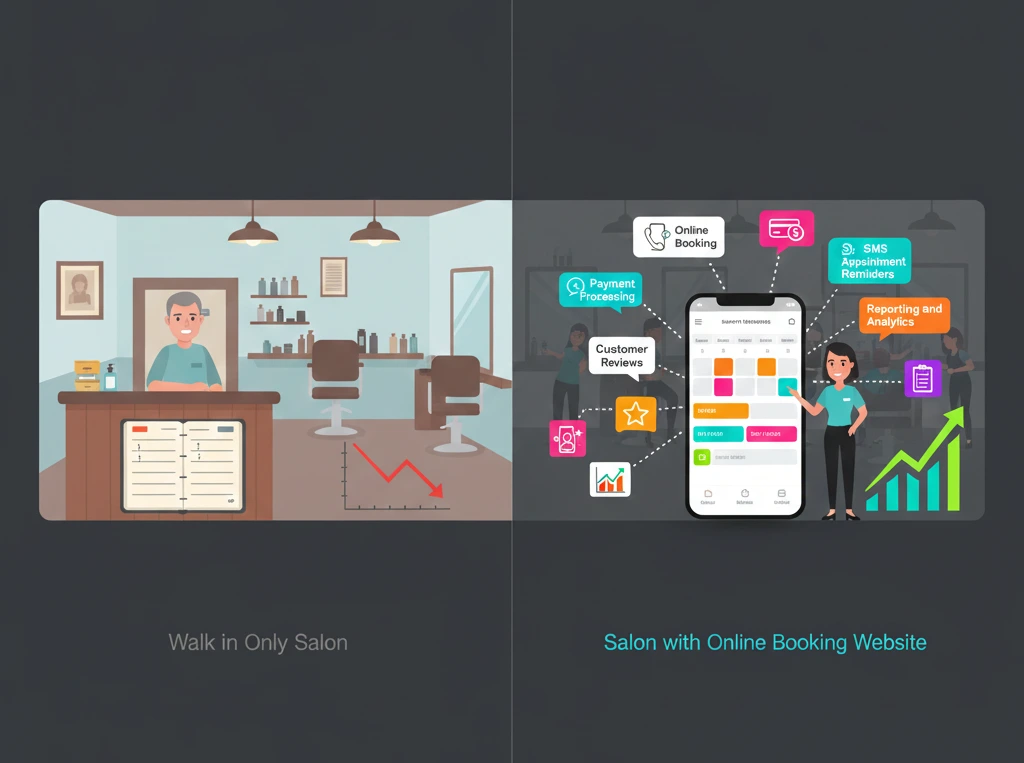
The Indian salon business no longer runs on location alone.
It now runs on:
- Visibility
- Trust
- Speed
- Convenience
A website is no longer marketing.It is basic business infrastructure.Salons that accepted this grew faster.
Salons that delayed paid more.
Ready to Get Your Salon Website Live
If customers can find you, trust you, and book easily, growth follows.